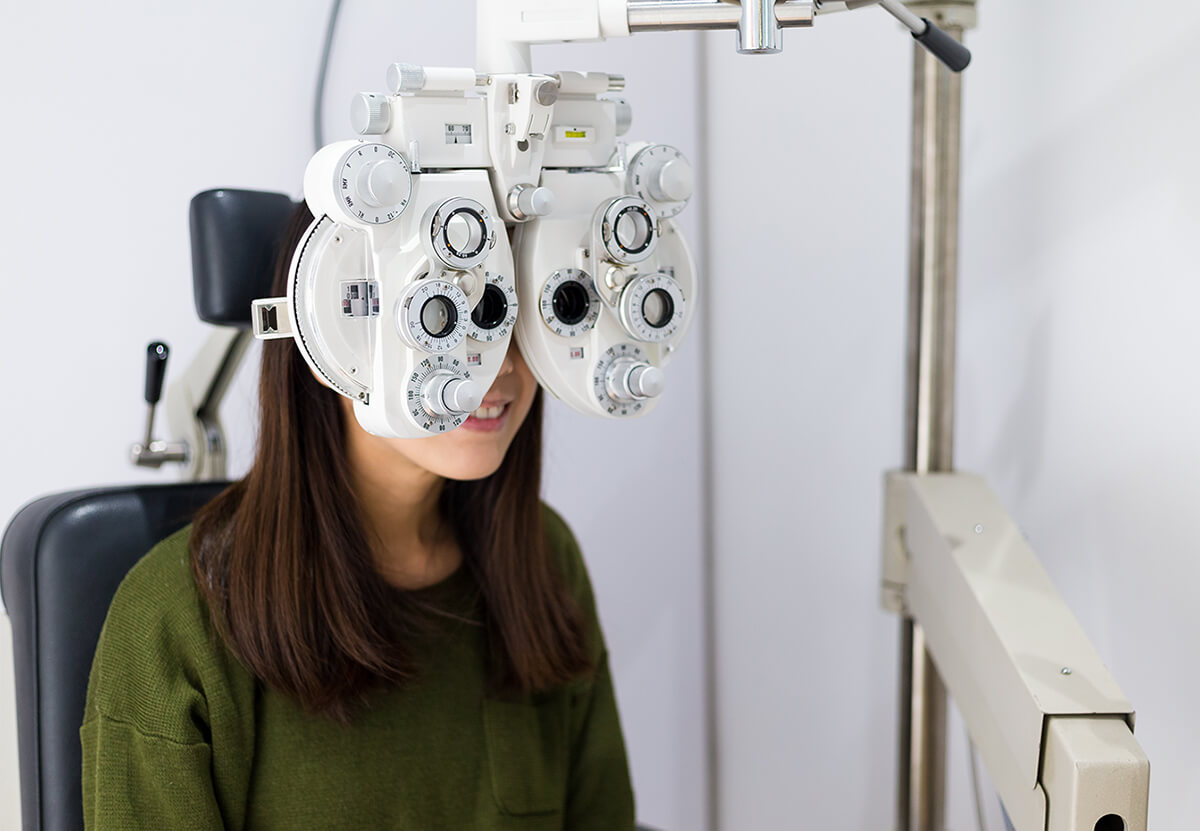
These days, we are demanding more from our visual system than ever before. Whether we are reading from a book, working at a computer or iPad, reading music, or even reviewing a news item on a phone, we are all interested in getting as much information as quickly and accurately as possible into our brains. And all that information must come in through both of our eyes, to our brain. But having 20/20 eyesight doesn’t mean that you have everything you need to get the most information, in the most rapid and accurate way, through your eyes, to your brain.
Is 20/20 Eyesight Enough?
You went for an eye examination and were told that you have 20/20 eyesight. What does that mean? It means that you can see small details from far away. But think for a moment. When you read, you need to point both your eyes with great precision at the same place on the page (eye teaming) and you need to keep the image clear (eye focusing). The information is imaged on the back of the eye (the retina) and is then sent to the brain to be interpreted. When our brain finally makes sense of all of that information we “see” it. Yes! We see with our brains, but gather the information with our eyes. What then happens is one needs to be aware of another word off to the side, and then we need to move both of our eyes together to the next word (eye-tracking).
20/20 Eyesight Vs Good Vision
So, while having 20/20 eyesight is nice, it’s not the same as having good vision. If you have good vision then you can meet all the visual demands of life, effortlessly. This includes reading, writing, copying, reading music, driving and playing ball sports. And soon, being able to use Virtual Reality(VR) goggles comfortably. But having good vision also means that you can remember things you’ve seen, like words on a board when copying. When it comes to spelling, remembering what the words sound like is not enough; you also need to be able to remember what they look like. And perhaps the ultimate in having good vision is the ability to visualize. This is the skill that enables us to think ahead, using imagery, and make good choices. It’s what enables us to imagine where we would like to get to in life, to have ambition. After all, when we can see clearly the things we’d like to achieve in life, it’s a lot easier to get there.
Aren’t Glasses Enough?
Glasses help a person see clearly with each eye. At LedermanVision so many of our clients benefit from our use of glasses in special ways to help our patients see more with less effort. These include prism glasses, bifocals and colored filters. However, in most cases, glasses can only make a difference. Our clients want to experience the difference. The difference, the greatest improvement in vision that you’re looking for, can usually be achieved only with a combination of the right glasses and Optometric Vision Therapy(OVT).
What is Optometric Vision Therapy (OVT)?
These days, we are demanding more from our visual system than ever before. Whether we are reading from a book, working at a computer or iPad, reading music, or even reviewing a news item on a phone, we are all interested in getting as much information as quickly and accurately as possible into our brains. And all that information must come in through both of our eyes, to our brain. But having 20/20 eyesight doesn’t mean that you have everything you need to get the most information, in the most rapid and accurate way, through your eyes, to your brain.
Is Optometric Vision Therapy about strengthening Weak Eye Muscles?
No. Healthy people do not have weak eye muscles. Each eye weighs about 9 grams (0.3oz), and the six muscles surrounding each eye are strong enough to move it. OVT is about refining muscle control. The changes that occur through OVT are much more like those that happen to someone learning to move his/her fingers efficiently with grace across the keys of a piano (i.e. brain-changes, learning) than the changes that occur when someone trains in a gym (i.e. muscle changes). And once you’ve mastered the skills, they’re yours for life!
What type of vision issues can be helped with Optometric Vision Therapy?
VT can treat a variety of vision problems including:
Research shows that visual attention can be significantly improved by Optometric Vision Therapy. After all, if you’re not focused (visually), how can you be focused (mentally)? Many children are being medicated in cases where there is an underlying visual efficiency problem, most commonly convergence insufficiency. Certainly there are children who have ADHD unrelated to any visual issues; there are others who have visual issues along with ADHD. But sadly there are children whose entire difficulty in maintaining attention is because of an inability to maintain visual focus, but they are being medicated.
Is Optometric Vision Therapy just for kids?
No. Not at all. Adults also have eyes and so many struggle to meet the visual demands of reading. In fact, because motivation is such a benefit when trying to learn something, we often find that we can achieve even quicker results when working with adults. At LedermanVision we are helping adults achieve in ways that were previously unimaginable for them. They are more focused, and less tired when reading, or driving.
We also work in the visual rehabilitation of those who unfortunately have suffered head injury (TBI) or stroke (CVA). Some of our equipment has been designed specifically with this population in mind.
Why do 1 in 5 people struggle to meet the Visual Demands of Reading?
Reading is a specialized skill for human beings. Until the printing press was invented in 1440, people weren’t reading all that much. Much of what we do with our eyes when we read, is unique to reading. Naturally, we wouldn’t have to make such perfectly accurate eye movements as the ones required when we move our eyes from word to word. Staying focused up close for long periods, is not something we would have to do in the way we do it when reading. Deciphering abstract symbols (i.e. letters) and giving them meaning is unique to reading. Reading must be taught. Speech is learned just by hearing it. There is no center in our brain dedicated to reading in the way that there’s one dedicated to vision, smell, balance, hearing, and regulation of our body systems. There is almost nothing we do with our eyes, that challenges them more than what we do with them when we read.
And so now you can understand why so many struggle to meet the visual demands of reading. And this includes many readers too! Who would be foolish enough to say that just because you can swim, you are swimming to the best of your ability. Everyone knows that you can improve the quality of the stroke, and that it makes a difference. Reading is similar. Improving the way your eyes team, track and focus, as well as improving perceptual skills, will impact on your ability to engage with the text.
How do I know if I can benefit from Optometric Vision Therapy?
I read better when the text is larger
I read better when I point with my finger
My eyes feel tired or uncomfortable while reading
Headaches while reading or studying
I have poor depth perception
I have difficulty remembering what I have read
I often lose my place, or jump over letters & words
Frequent loss of concentration while reading
Words move, jump, or appear to "swim"
Double vision
I am a slow reader
"Pulling" sensation around eyes while reading
Words blur, or go in and out of focus
Reading or computer use makes me sleepy
I often re-read the same line over and over
I do not like to read for pleasure
I have a short attention span while reading compared to other activities
I have poor eye-hand coordination while playing sports